Why Is My Website Traffic Dropping? 7 Causes an Audit Will Find
Posted on
Website Audit
Posted at

You log into your analytics dashboard and something's off. The numbers are lower than last month. Lower than last week, even. No one told you anything changed, but your website traffic is dropping and you have no idea why.
It's one of the most stressful moments in running a website. The good news is that a falling traffic graph almost always has a clear cause. You just need to know where to look.
This guide walks through the seven most common reasons for a website traffic drop, and how a proper audit tracks down the real one.
The First Thing to Check When Traffic Drops
Before you panic, check the data itself. Plenty of "traffic drops" turn out to be nothing more than a tracking problem.
Rule Out Tracking Errors First
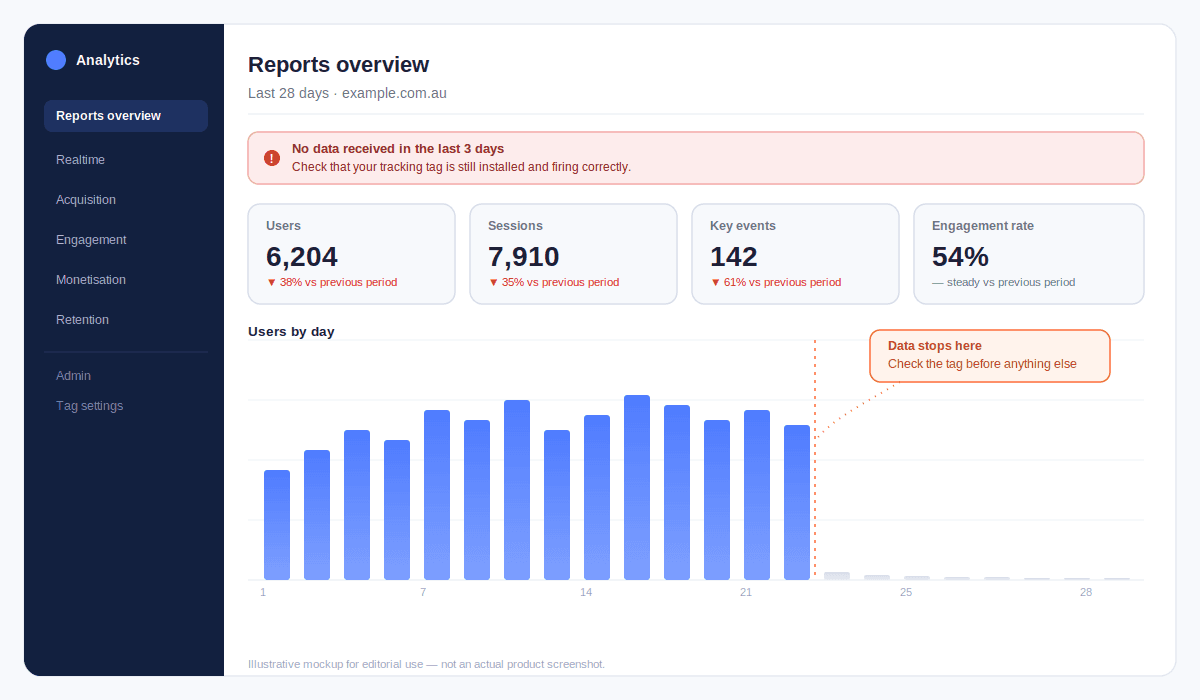
Analytics tools break more often than people think. A recent website update, a new cookie banner, or a plugin conflict can quietly stop your tracking code from firing properly.
Before you dig into causes, check:
Is your tracking code (GA4, tag manager, etc.) still installed on every page?
Did a recent site update or plugin change break anything?
Are you comparing the same date ranges and the same traffic sources?
Has your cookie consent banner started blocking analytics by default?
If your numbers look like they fell off a cliff overnight, tracking is often the first place to check. A real algorithm-driven or seasonal drop tends to happen gradually, not all at once.
7 Common Causes of a Website Traffic Drop
Once you've ruled out a tracking issue, it's time to look at the real possible causes. Here are the seven we see most often.
1. A Google Algorithm Update
Google updates its search algorithm several times a year. Some updates are minor. Others reshuffle rankings across entire industries overnight.
If your drop lines up with a known update date, this is likely your answer. Google publishes update rollouts on its Search Status Dashboard, so it's worth checking the timing against your own traffic graph.
2. Lost Backlinks
Backlinks (links from other websites to yours) are one of the strongest ranking signals Google uses. If a site linking to you goes offline, removes the link, or gets penalised itself, your rankings can slip.
This tends to happen gradually rather than overnight, but it adds up. Losing a handful of strong backlinks over a few months can be enough to knock you down the search results.
3. Technical Issues (Broken Pages, Slow Speed)
Google needs to be able to crawl, load, and understand your website. When something breaks that process, traffic follows it down.
Common technical culprits include:
Pages returning errors (404s) that used to work fine
A sudden drop in site speed
Accidentally blocking Google in your robots.txt file
A broken sitemap
Mobile usability issues after a design change
These issues are often invisible to a normal visitor scrolling through your site, which is exactly why they go unnoticed for so long.
4. Seasonal or Industry Trends
Not every drop is a problem you caused. Some industries are simply seasonal. A landscaping business will see less search interest in the middle of winter. A tax accountant will see a lull after tax season ends.
Before assuming the worst, compare this period to the same period last year, not just last month. If the pattern repeats annually, it's likely just the season talking.
5. New Competitors Outranking You
SEO isn't static. While your website sits still, competitors are actively publishing new content, building links, and improving their sites. If a competitor overtakes you for your main keywords, your traffic share shrinks even if your own site hasn't changed at all.
This is one of the harder causes to spot, because nothing on your own site looks broken. The only way to catch it is by checking your keyword rankings directly.
6. Content Going Stale
Search engines favour content that stays useful and current. A blog post that was accurate two years ago might now reference outdated information, old prices, or products you no longer offer.
Over time, Google notices when a competitor's fresher content better answers the same search. Your rankings, and traffic - quietly slide as a result.
7. A Site Migration or Redesign Gone Wrong
Redesigns, replatforming, and URL changes are one of the riskiest things you can do to a website's SEO. If redirects aren't set up properly, or if key pages get removed or renamed during a redesign, search engines can lose track of content they used to rank well.
If your drop happened right after a website relaunch, this is the first place to look.
How to Diagnose the Real Cause
Spotting a drop is easy. Finding the actual cause takes a bit more digging.
Reading Your Analytics the Right Way
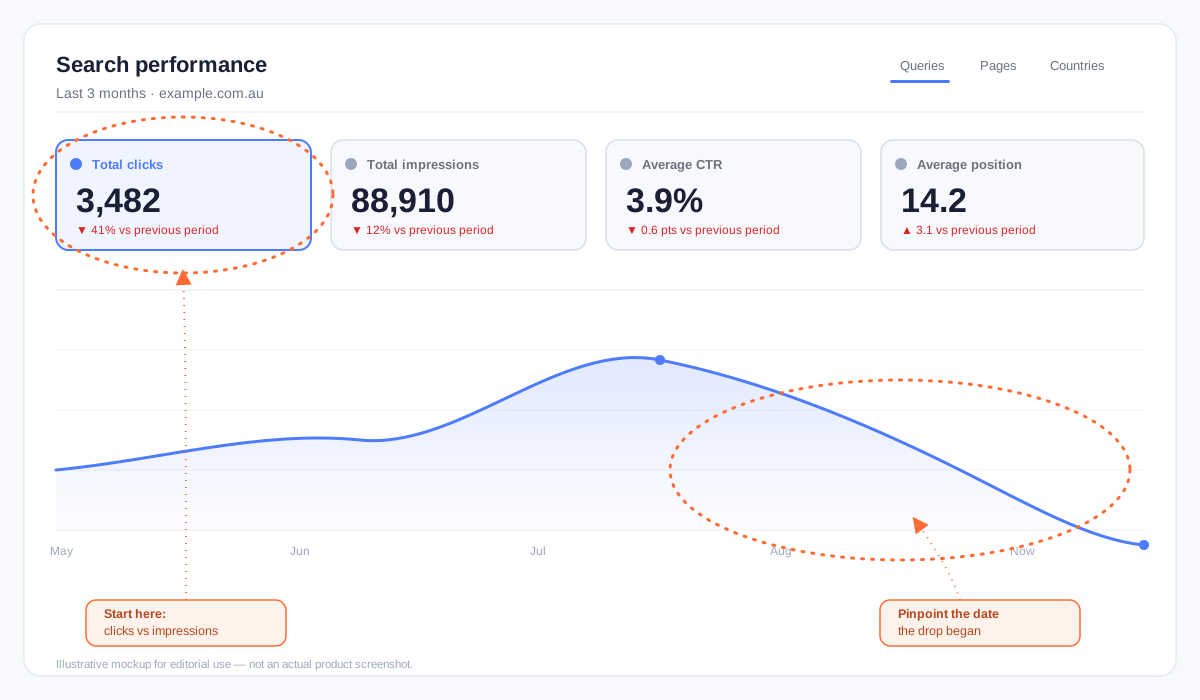
Start by narrowing down where the drop is coming from:
Which pages lost traffic? A drop on one page points to a content or technical issue. A site-wide drop suggests something bigger, like an algorithm update.
Which traffic source dropped? Organic search, paid ads, social, and referral traffic all have different causes. Knowing which one fell tells you where to focus.
When exactly did it start? A precise date helps you match the drop against known algorithm updates, site changes, or seasonal shifts.
Google Search Console is one of the most useful free tools here. It shows exactly which keywords and pages lost visibility, and roughly when.
When to Get a Professional Audit
If you've checked the obvious causes and you're still stuck, it's usually a sign the problem is technical, or buried deeper than a quick look can find. A full website audit checks crawlability, site speed, backlink health, keyword rankings, and content quality all at once, rather than guessing at one cause at a time.
Getting Your Traffic Back on Track
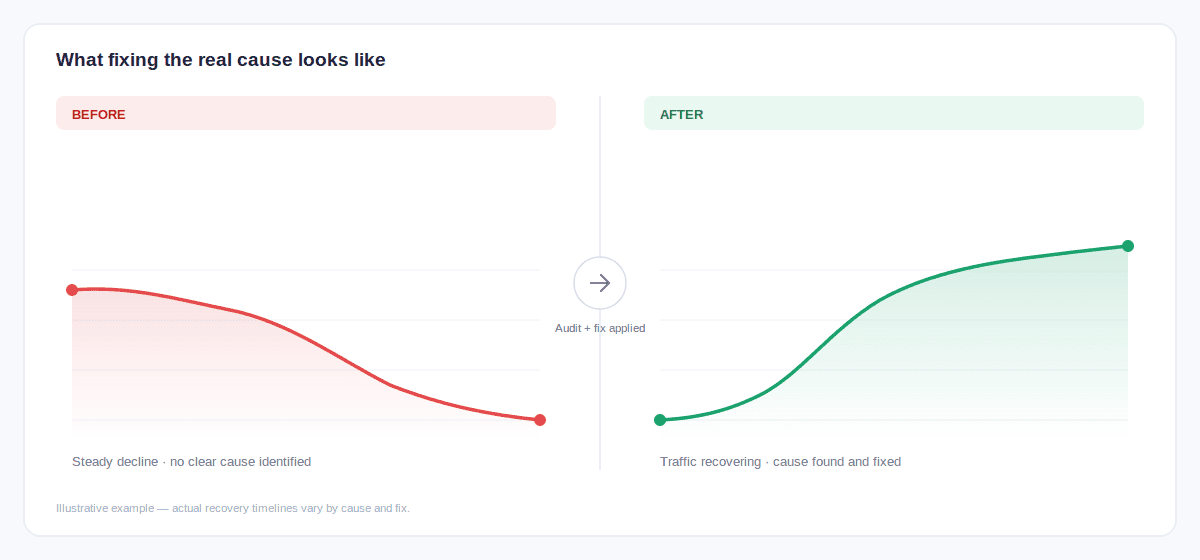
A traffic drop feels alarming, but it's rarely permanent. Most causes on this list are fixable once you know what you're dealing with: broken redirects can be repaired, stale content can be refreshed, and lost backlinks can be replaced with new ones.
The key is finding the actual cause before you start making changes. Fixing the wrong problem wastes time and can sometimes make things worse.
If your traffic has dropped and you can't pin down why, a professional website audit will find the answer - and give you a clear plan to fix it.