
Why Your Website Isn't Ranking on Google (Even With Good Content)
Posted on
SEO
Posted at
You've written good content. You've put in the effort. And yet, when you search for your own business, your website is nowhere to be found. It's a frustrating position to be in, and it's more common than you'd think.
Ranking on Google isn't just about having good content. It's about making sure Google can find that content, understand it, and trust it enough to show it to searchers. If any one of those steps breaks down, your rankings suffer, no matter how well written your pages are.
This guide walks through the most common reasons websites don't rank, how to check which one applies to you, and what to do about it.
Good Content Isn't Enough on Its Own
It's a common myth that great content automatically ranks. In reality, Google is weighing dozens of factors at once, and content quality is just one of them.
Think of it this way: even the best-written article in the world won't rank if Google can't crawl the page, if the site takes too long to load, or if a hundred other websites already answer the same question better. Content is necessary, but it's rarely sufficient by itself.
The good news is that most of the barriers standing between your content and a good ranking are fixable once you know what they are.
The Most Common Reasons Sites Don't Rank
Here are the six issues we see most often when a website has solid content but still isn't ranking.
Your Site Is Too New (Sandbox Effect)
New websites, even well-built ones, often take time to rank. Many SEOs refer to this as the "sandbox effect": a period where Google appears cautious about ranking new sites highly, possibly to confirm they're legitimate and not spam.
There's no official confirmation from Google that this exists as a formal mechanism, but the pattern is consistent enough that most experienced SEOs plan for it. If your site is under six months old, patience combined with steady, consistent effort is often the real fix.
Technical SEO Problems Are Blocking Google
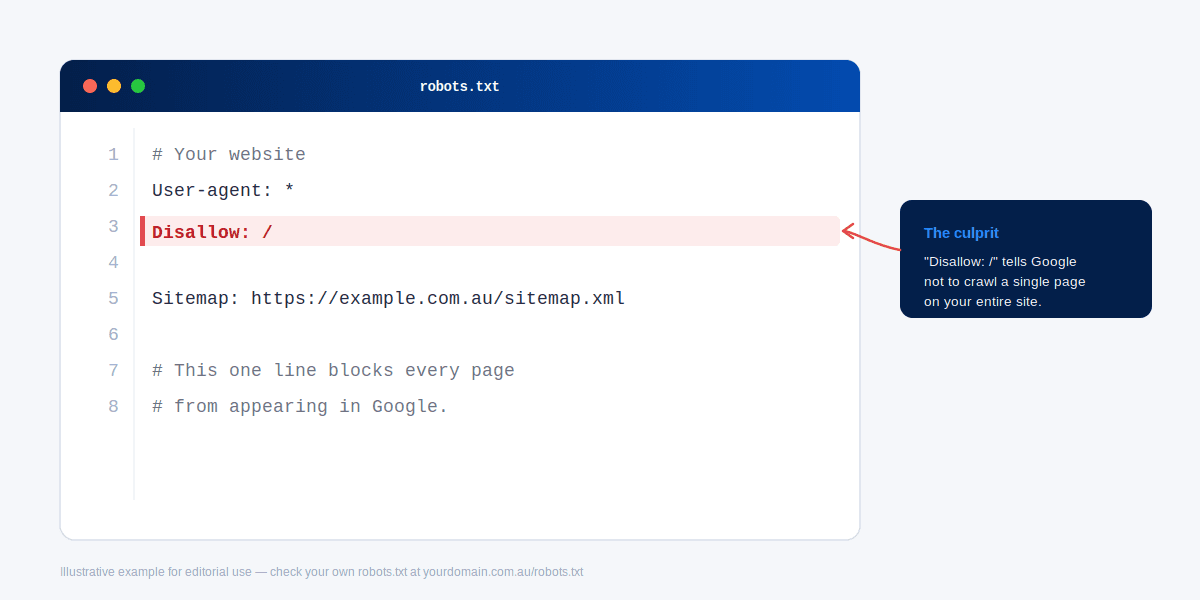
Google can only rank pages it can access and understand. If something is blocking that process, your content might as well be invisible.
Common technical blockers include:
Pages accidentally excluded in your robots.txt file
Missing or broken XML sitemaps
Pages marked "noindex" by mistake
Duplicate content confusing which page should rank
Broken internal links stopping Google from finding pages
These issues are easy to miss because they're invisible to a normal site visitor. You won't notice them just by browsing your own website.
You're Targeting the Wrong Keywords
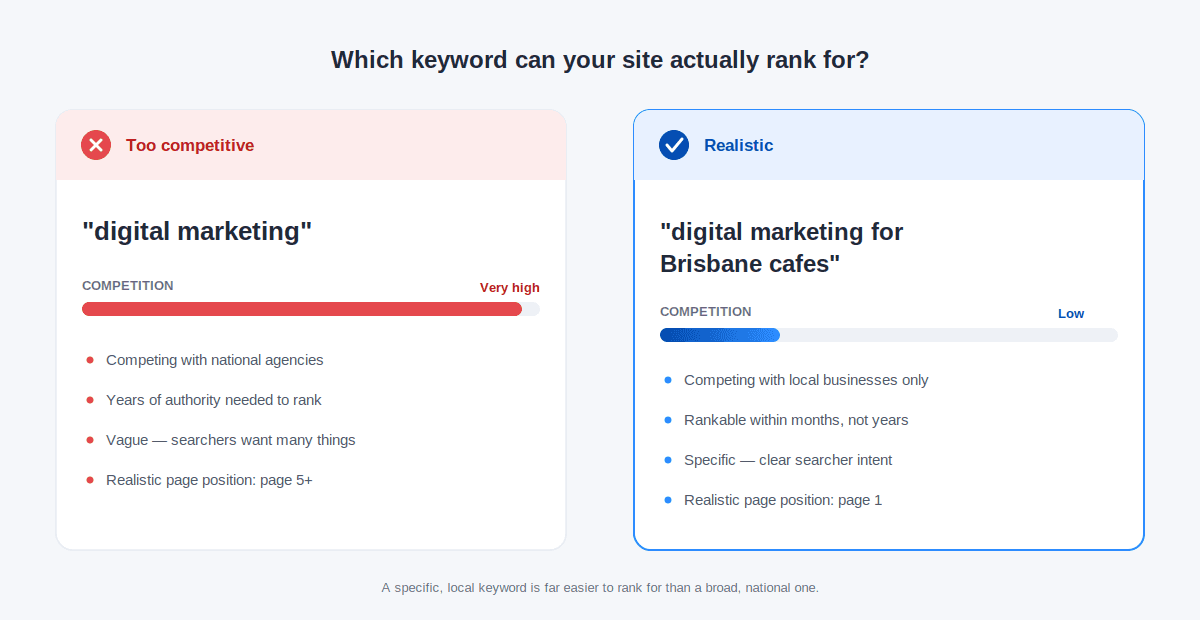
Sometimes a site ranks fine, just not for the terms the owner expects. This usually comes down to targeting keywords that are too competitive, too vague, or not actually what your audience is searching for.
A page built around "digital marketing" is competing against massive, established sites with years of authority behind them. A page built around "digital marketing for Brisbane cafes" has a realistic shot. Matching your content to keywords your site can actually compete for is often the difference between page one and page five.
You Don't Have Enough Backlinks
Backlinks, links from other websites pointing to yours, remain one of the strongest signals Google uses to judge trust and authority. A page with excellent content but zero backlinks is often outranked by a mediocre page with a strong link profile.
This doesn't mean you need thousands of links. For most small business keywords, a handful of relevant, genuine backlinks can make a real difference. Quality and relevance matter more than sheer volume.
Your Content Doesn't Match Search Intent
This is one of the most overlooked reasons content fails to rank. Google isn't just matching keywords, it's matching intent.
If someone searches "how to fix a leaking tap" and your page is a sales pitch for plumbing services, Google is unlikely to rank it well, even if the keyword appears throughout. The searcher wanted a how-to guide, not a sales page. Reviewing what actually ranks for your target keyword, and matching that format and intent, is often a quick and powerful fix.
Slow Site Speed or Poor Mobile Experience
Google has confirmed that page experience, including load speed and mobile usability, factors into rankings. A slow site or one that's clunky on mobile can hold back even well-optimised content.
Since most searches now happen on mobile devices, a site that's hard to use on a phone is working against itself twice over: once with users, and once with Google.
How to Check What's Actually Wrong
Reading through six possible causes is one thing. Finding out which one applies to your site is another. Here's where to start.
Using Google Search Console
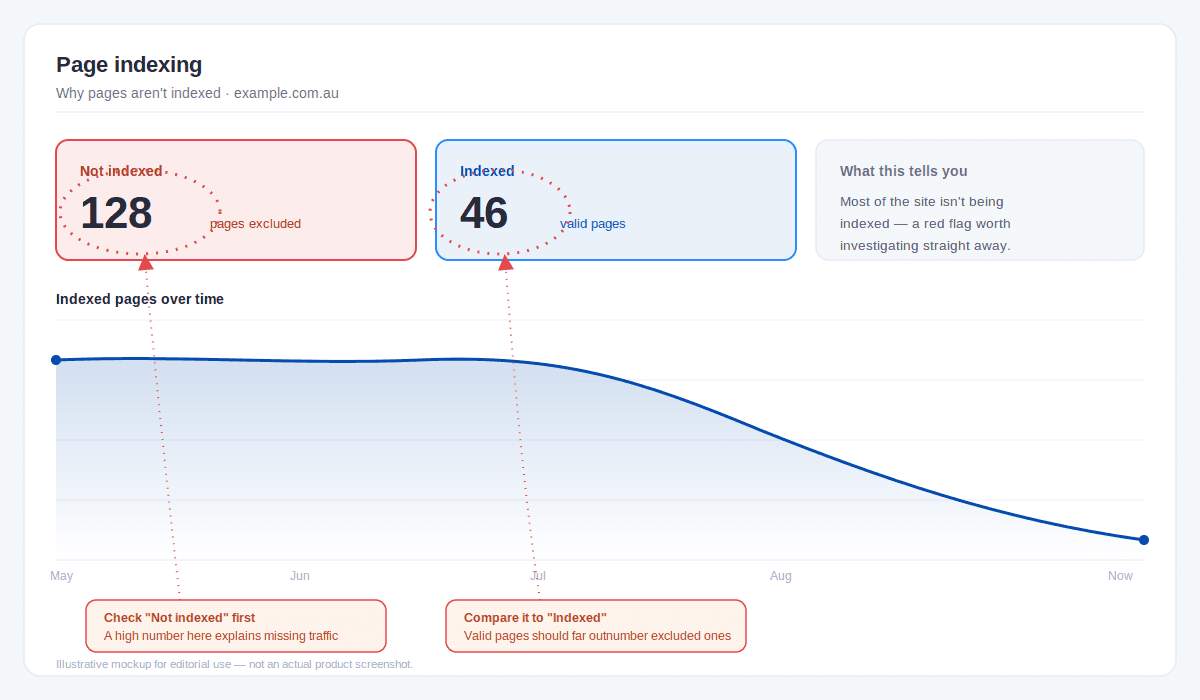
Google Search Console is a free tool that shows you exactly how Google sees your website. It's the fastest way to narrow down what's going wrong.
Inside Search Console, check:
Coverage/Indexing report: shows which pages are indexed and flags any that are blocked or excluded.
Performance report: shows which keywords you're actually ranking for, and where.
Core Web Vitals report: flags speed and page experience issues.
Mobile usability report: flags problems specific to mobile visitors.
Together, these reports usually point straight at the cause, or at least narrow it down to one or two likely culprits.
Signs You Need a Professional Audit
Some issues are quick to spot and fix yourself. Others, especially technical SEO problems or intent mismatches across a whole site, are harder to diagnose without experience.
It's worth bringing in a professional audit if:
You've checked Search Console and nothing obviously stands out
Your rankings have been stuck for months with no clear reason
You suspect a technical issue but aren't sure how to confirm it
You're about to invest heavily in new content and want confidence it'll actually rank
A proper audit checks all six of these areas systematically, rather than guessing at one cause at a time.
What to Do Next
Not ranking on Google rarely comes down to one single mistake. More often, it's a combination of small factors working against each other: a slightly-too-competitive keyword here, a technical issue there, content that's just slightly off from what searchers actually want.
The fix isn't to write more content and hope. It's to work out exactly what's holding your current content back, then address that specifically. Start with Search Console, work through the six causes above, and you'll usually land on a clear answer.
If you've checked everything and you're still stuck, a professional website audit can find what a self-check might miss, and give you a clear, prioritised plan to start climbing the rankings.

